The health industry is swiftly adapting to digital
technologies in order to increase patients' communication as well as
operational efficiency. Today, patients expect quicker responses and
seamless appointment scheduling and a streamlined support system by healthcare
professionals.
Traditional methods of communication such as telephone calls
and email messages frequently cause delays, missing appointments, as well as an
increased administration workload. That's the reason why clinics,
hospitals as well as healthcare organizations are making the switch to Whatsapp's
business API solutions to streamline patient interaction and to automate
appointment management.
WhatsApp is now an increasingly popular communication
platforms in the world. Healthcare facilities can make use of it to
schedule appointments as well as automate customer support. send reports and
boost the engagement of patients.
In this blog, we'll examine how healthcare professionals can
make use of WhatsApp technology to enhance the communication process, decrease
manual work and provide better customer experience.
Why Healthcare Providers Need Better Communication
Communication is one of the most important factors that are
part of excellent healthcare delivery. Late responses and poor scheduling may
lead to frustrations by patients.
The most common communication issues in healthcare are:
- Scheduling
missed appointments
- Lang
wait time
- Call
volumes are high
- Delayed
patient support
- Manual
appointment scheduling
- Ineffective
follow-up communications
Modern hospitals require effective and efficient
communication tools to enhance patient experience.
That's where a reliable WhatsApp API service
supplier can aid healthcare companies optimize conversations and facilitate
patients' engagement in a way that is efficient.
What Is WhatsApp API for Healthcare?
WhatsApp API is an official messaging service designed
for enterprises who handle large-scale communications with customers. Healthcare
facilities can benefit from it by helping patients automatize their
interactions with doctors and make appointments more efficient.
In contrast to the basic WhatsApp Business app The API is
different from the standard WhatsApp Business App. API includes advanced
features, including:
- Automatic
notifications
- Support
for multi-agents
- Chatbot
integration
- Connectivity
to CRM
- A
reminder to make appointments
- Bulk
patient messaging
- Analytics
and reports
Health care providers can utilize these instruments to boost
efficiency, while ensuring personalized patient communications.
Benefits of WhatsApp API for Healthcare
Faster Appointment Booking
Customers today are more comfortable using online booking
options in place of lengthy phone calls.
Health care providers can automatize appointment scheduling
via WhatsApp and permit patients to:
- Schedule
appointments immediately
- Choose
available time slots
- Automatically
receive confirmations
- It
is easy to schedule appointments.
- Reminders
are sent to you
This greatly reduces the administrative burden and enhances
the patient's experience.
Better Patient Engagement
Engagement of patients is crucial to ensure long-term health
relationships.
Health professionals can make use of WhatsApp to
communicate:
- Health-related
reminders
- Instructions
for following-up care
- Vaccination
alerts
- Notifications
about prescriptions
- Tips
for a healthy lifestyle
- Approval
confirmations for appointments
Personalized communication increases trust among patients
and promotes greater participation in healthcare.
Automating Healthcare Communication
Handling thousands of patient calls by hand can be
overwhelming to healthcare professionals.
Utilizing Whatsapp's automation helps health
organizations to simplify repetitive communication and enhance productivity.
Automation is able to handle:
- Approval
confirmations for appointments
- Patient
inquiries
- Reminder
notification
- Feedback
collection
- Alerts
on billing
- Reminders
for refills on prescriptions
It also reduces the workload of staff as well as ensuring
that patients receive prompt answers.
Using AI Chatbots in Healthcare
Healthcare providers are often faced with daily questions
from patients. Hand-holding every question could slow support service.
This is the point at which WhatsApp Ai Chatbots are
extremely beneficial.
Chatbots powered by AI can answer queries related to
- The
timings of clinics
- Doctor
availability
- Reservations
for appointments
- Consultation
fees
- Assistance
in an emergency
- Prescription
updates
The most advanced AI chatbots may even help patients with
workflows based on symptoms and send urgent situations to medical professionals
when required.
The benefits of AI chatbots comprise:
- 24/7
patient support
- Rapider
response time
- Support
costs are reduced
- Better
patient satisfaction
- Better
lead management
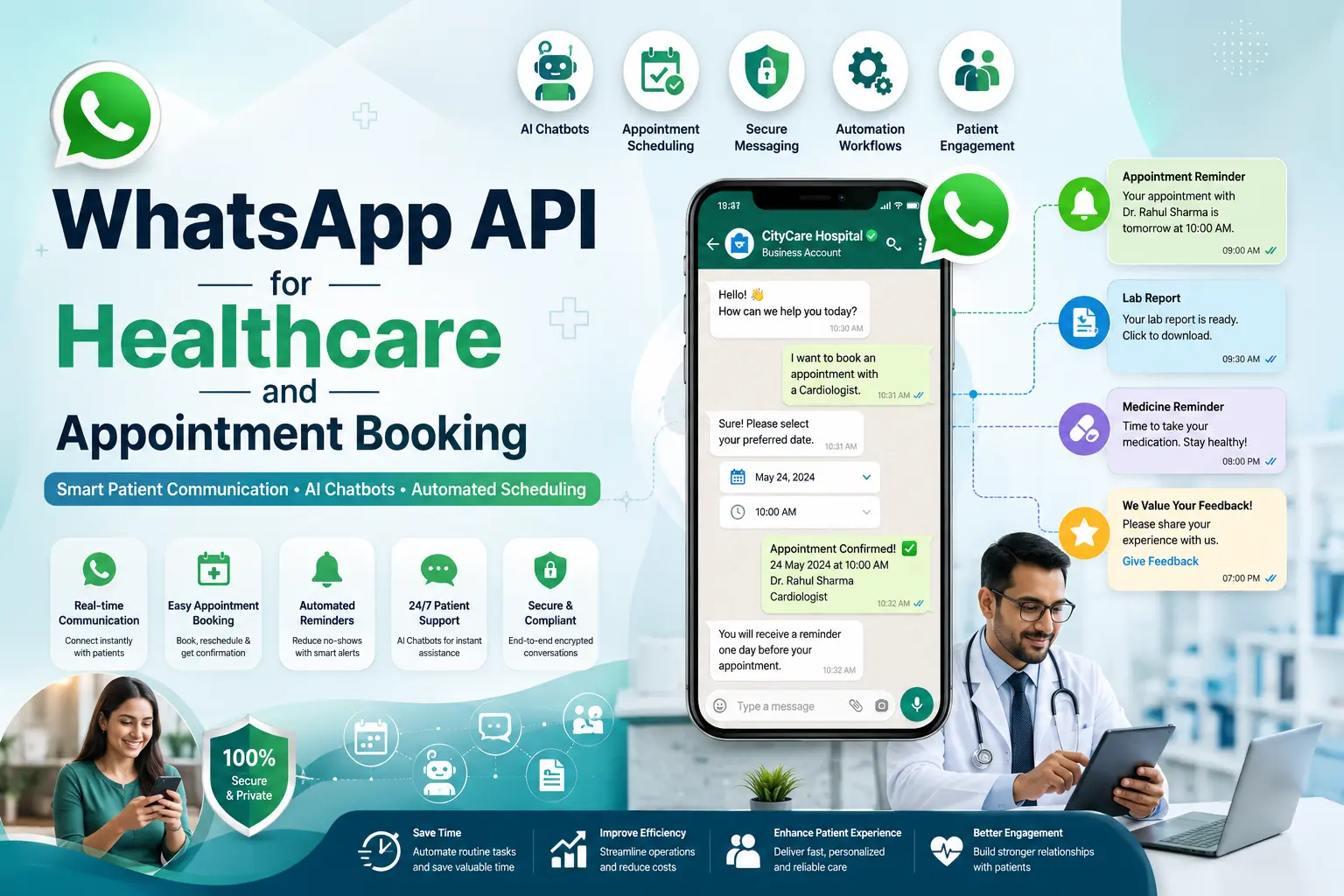
How Chatbots Improve Appointment Scheduling
Modern health care companies are more and more relying
on chatbots in WhatsApp API systems to streamline appointment
scheduling as well as patient communications.
Chatbots could:
- Help
patients book their appointments
- Share
doctor availability
- Make
sure appointments are confirmed immediately
- Automated
reminders
- Handle
rescheduling requests
It ensures a seamless experience for customers while
reserving rooms, apart from cutting down the workload of the administrative
departments in hospitals and clinics.
Appointment Reminders and Notifications
The absence of appointments is a significant issue for
health care providers.
Automated WhatsApp reminders could help cut down the number
of no-shows dramatically.
The healthcare organizations are able to make
- A
reminder to make appointments
- Notifications
for check-ups
- Medicine
reminders
- Following-up
messages
- Confirmation
of payment
This timely alerting improves the consistency of
communication and allow patients to keep themselves up to date.
Bulk Messaging for Healthcare Communication
Many healthcare facilities and hospitals are likely to deal
with numerous clients within one day.
The advantage of WhatsApp bulk messaging can be used
for health practitioners to make urgent notifications.
Health care providers may use bulk messaging to:
- Health
awareness programs
- Vaccination
drives
- Notifications
for emergencies
- Tips
for a healthy winter season
- Wellness
and fitness programs
- Reminders
for appointments
But, businesses in the healthcare industry must be sure to
obtain consent from patients and refrain from promoting their services in a way
that is too invasive.
CRM Integration for Better Patient Management
Integration of WhatsApp to Healthcare CRM systems can help
providers to organize patient records and increase the tracking of
communications.
Integration of CRM allows healthcare professionals to:
- History
of interactions with patients stored in the patient's database
- Status
of appointment on track
- Staff
should be able to assign conversations
- Monitor
patient engagement
- Better
follow-up management
This helps create a better communications ecosystem for
healthcare institutions.
Security and Compliance in Healthcare Messaging
Communication with healthcare professionals includes
sensitive patient data so security is vital.
Health care providers must:
- Utilize
WhatsApp API solutions that are official. WhatsApp API solutions
- Respect
the rules regarding privacy in healthcare.
- Obtain
patient consent
- Make
sure your communications systems are secure
- Secure
private medical information
Utilizing an official WhatsApp service provider can help
make sure that you are in compliance with the best security and communication
procedures.
Common Challenges Healthcare Providers Face
Even though WhatsApp has many advantages but healthcare
professionals must also be aware of potential issues.
Managing Large Message Volumes
Hospitals are often overwhelmed with patients' inquiries
every day.
Chatbots and automated systems aid in to manage
communications more effectively.
Maintaining Human Interaction
Even though automation is beneficial but patients are still
accustomed to individual attention to sensitive health questions.
Healthcare professionals should integrate the use of
technology with support from a human.
Data Privacy Concerns
Healthcare companies must secure the processing of patient
information and adhere to privacy laws in a strict manner.
Best Practices for Healthcare Communication on WhatsApp
To reap the maximum benefits from WhatsApp Healthcare
providers must be following these top practices:
Get Patient Consent
Always get patient consent before making any messages.
Keep Messages Professional
Utilize clear, concise professional language.
Use Automation Wisely
Automate repetitive tasks and maintain the human touch when
needed.
Send Relevant Notifications
Do not use too much messaging, and instead focus on a
productive communications.
Monitor Patient Feedback
Examine frequently patient feedback and develop methods of
communication.
Future of WhatsApp in Healthcare
Healthcare communication in the digital age is developing
fast.
Future trends may include:
- AI-powered
health assistants for the elderly
- Appointment
booking via Voice
- Predictive
patient communication
- Automation
of healthcare with smart technology
- Advanced
Conversational AI
Healthcare facilities that adopt the latest technology for messaging early can gain advantages in competition and will improve the patient experience significantly.
Conclusion
Healthcare communications are becoming technologically
advanced, automated and focussed on patients. WhatsApp gives healthcare
providers the ability to enhance the management of appointments, improve help,
and improve involvement of patients.
With the help of automated processes, AI chatbots, and
secured messaging services Healthcare organizations can improve their processes
while providing better experience.
No matter if you are a doctor, hospital or clinic, or a an healthcare company, using WhatsApp messaging solutions can increase efficiency, decrease absences, and improve relations with patients over the long term.