Communication with customers
has changed significantly over the past 10 years. Customers expect
businesses to be online via their preferred platforms for messaging that
provide quick and efficient responses as well as personal interactions. Of
all them, WhatsApp has emerged as one of the strongest platforms for customer
interaction in sales, support, and other areas.
Companies across all
industries are using WhatsApp
API integration for streamlined communication. simplify repetitive
tasks as well as provide superior customer experience. If you're operating
an eCommerce shop or healthcare facility, financial services or an emerging
startup Integrating WhatsApp to your strategy for communication will give you
an edge over your competitors.
This tutorial guides you
through the entire WhatsApp API integration process, aiding you to understand
the prerequisites as well as the setup procedure and the best practices to
ensure a successful installation.
What Is WhatsApp API?
WhatsApp API is an official
application designed specifically for medium and large-sized businesses who
need to handle customer interactions on a massive the scale of. In
contrast to WhatsApp's Business App, the API provides advanced features that
allow for the automation of the integration of CRM, multi-agent access as well
as large-volume messages.
The most important features
are:
- Automatic notifications
- Customer support
automation
- Connectivity to CRM
- Multi-agent communications
- Analytics and reportage
- Chatbot deployment
- Secure messaging
infrastructure
Thus, WhatsApp emerges as an
important form of communication that contemporary companies are utilizing for
increasing customer engagement.
Why Businesses Need WhatsApp
API Integration
Businesses must now face
increased need for responding quickly and effectively to queries from
consumers. The traditional channels of communication often do not meet the
demands of customers.
Through the implementation
of WhatsApp business api businesses can streamline
communication with customers and give better, faster and more personal service.
Benefits are:
- Speedier response times
- Higher customer
satisfaction
- Better lead management
- Conversion rates have
improved
- Increased customer
retention
- Scalable communication
workflows
While expectations of
customers continue to grow, businesses require solid messaging systems that can
help to boost productivity and growth.
Key Use Cases for WhatsApp API
It is important to know about
the business organizations using the API before integrating with the WhatsApp
API.
Common use scenarios include:
Customer Support
Offer immediate assistance and
help in resolving queries effectively.
Lead Generation
Leads can be nurtured and
captured by using WhatsApp chats.
Order Updates
Notify recipients of shipping
confirmations, shipment updates as well as delivery notices.
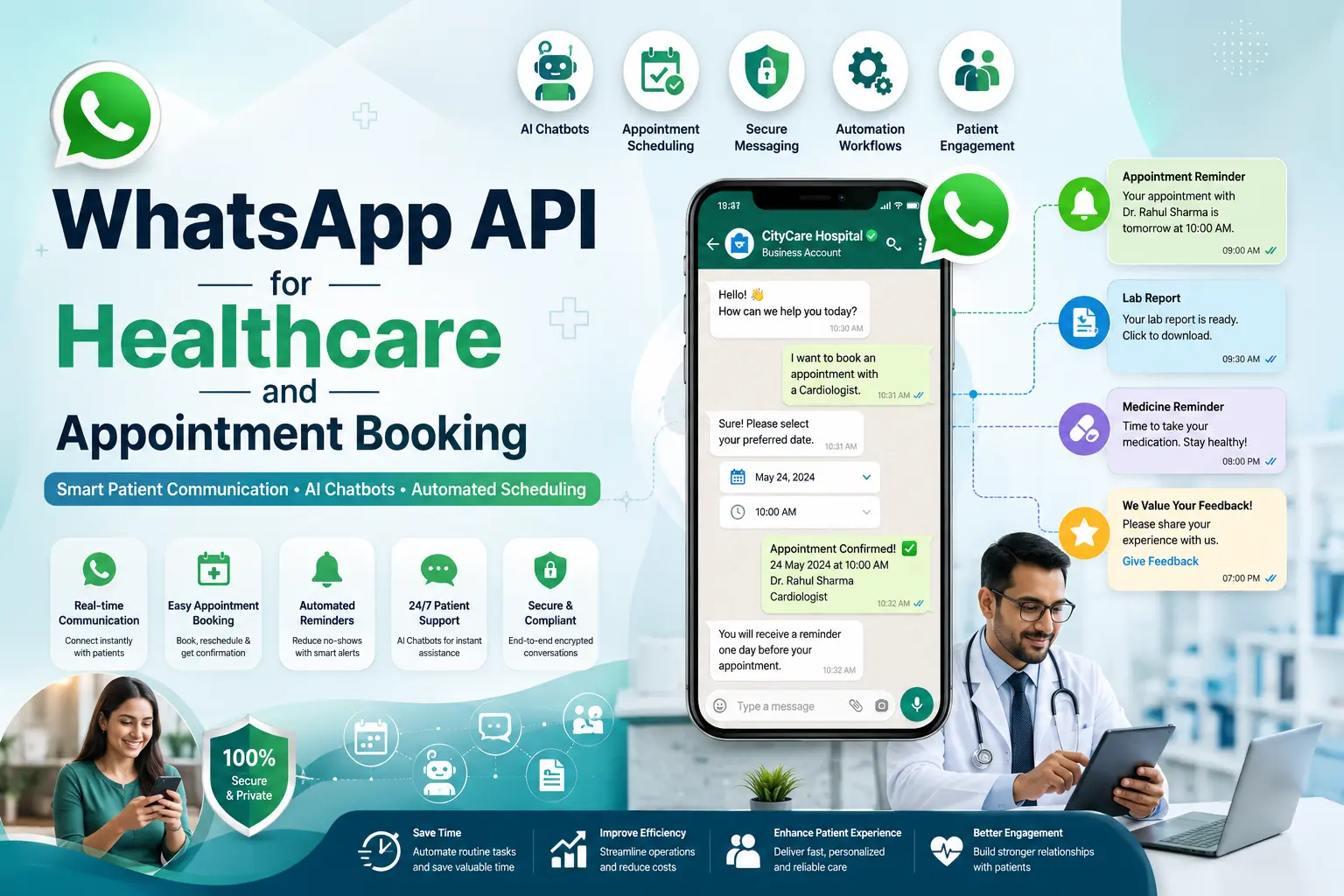
Appointment Scheduling
Let customers reserve, modify
or change appointments.
Marketing Campaigns
Send customized offers and
promotion messages to clients who have opted for them.
They enable companies to offer
seamless customer experience through minimization of manual labor.
Prerequisites Before
Integration
The success of implementation
begins with the an appropriate planning.
Before starting, be sure
you've got the following:
- An authentic corporate
entity
- A Facebook Business
Manager account
- A designated phone number
to be used for WhatsApp
- Opt-in methods for
customers
- A clear communication
workflow
The most important thing is
choose a reputable WhatsApp
API service with the
capacity to meet your requirements for integration.
An experienced provider will
help ease the installation process, as well as assist with technical support
and other features to improve your message strategy.
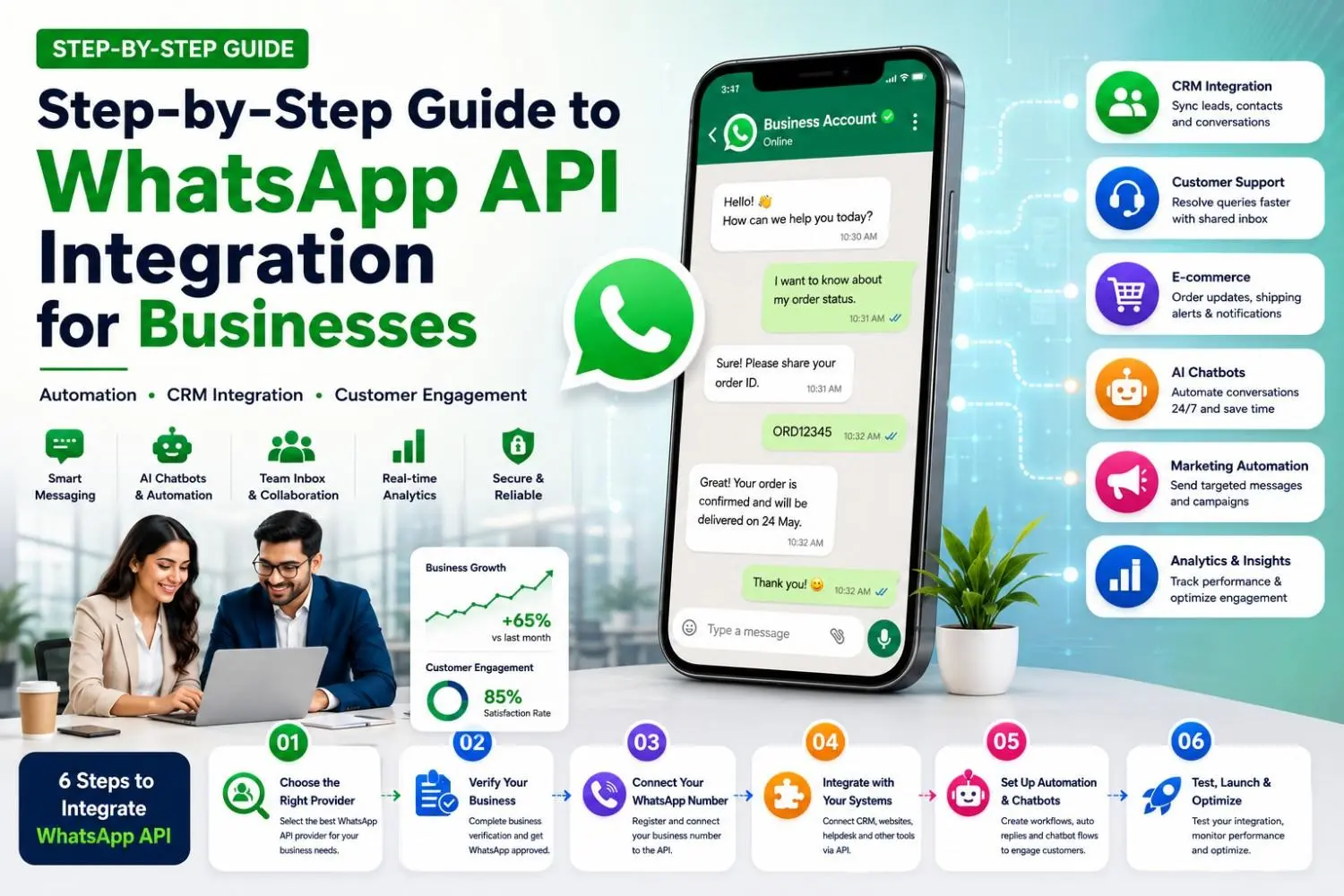
Step 1: Choose the Right
WhatsApp API Provider
Selecting the best service
provider is one of the most important decisions that can be made during the
course of integration.
When evaluating providers,
consider:
Ease of Integration
Find platforms with
easy-to-use setup procedures and developers-friendly APIs.
Automation Features
Automation of workflows can
greatly enhance efficiency in operations.
Analytics and Reporting
The performance insights can
help improve the communication strategy.
Technical Support
A reliable customer service
can speed up deployment and troubleshooting.
Pricing Structure
Select a service that is
compatible with your budget as well as the projected messages quantity.
The best provider should be
able to aid businesses to deploy WhatsApp swiftly without needing an extensive
level of technical knowledge.
Step 2: Verify Your Business
The verification of business
is necessary prior to being able to use the full features of the WhatsApp API.
The typical verification
procedure involves:
- Initiating the Facebook
business Manager account
- Sending business details
- Uploading verification
documents
- After completing the
business authentication process, you can complete
Common documents can contain:
- Certificates for business
registration
- Tax identification
documents
- Utility bills
- Business licenses that
are official.
Successfully completing
verification helps build confidence and allows access to more advanced WhatsApp
features.
Step 3: Register and Connect
Your WhatsApp Number
After confirming your identity
then you'll have to join a number with WhatsApp API account. WhatsApp API
account.
The most important
considerations are:
- Make sure you have a
business number that is dedicated to your company.
- Make sure the number
isn't actively associated with your personal WhatsApp account.
- Modify the preferences
for messaging
- Establish corporate
profiles
This is the first step in
laying the groundwork for future interactions with customers.
Step 4: Integrate WhatsApp
with Your Existing Systems
Next, you need to connect
WhatsApp with your company tools and workflows.
Some of the most well-known
integrations are:
CRM Platforms
CRM integration enables
businesses to:
- Follow the customer's
interactions
- Manage sales pipelines
- History of conversations
in Store
- Enhance customer
experience by personalizing the way customers are served
E-commerce Platforms
Businesses can automate:
- Confirmation of orders
- Shipping notification
- Cart abandonment
reminders
- Customer feedback
requests
Helpdesk Systems
Support teams can handle
interactions more efficiently by using centralized screens.
The integrations created
create an integrated communication system across departmental boundaries.
Step 5: Implement Automation
Workflows
The volume of messages
increases the manual process becomes more challenging to handle.
That's where WhatsApp
business automation comes
into play.
Automatization is able to
handle:
- Thank you messages
- FAQ response
- Lead qualification
- A reminder to make
appointments
- Order updates
- Customer feedback
collection
Automating repetitive tasks
firms can speed up the speed of response while also reducing the operational
cost.
Step 6: Deploy Chatbots
Role played by Chatbots in
customer-focused strategy in today’s time is significant.
Through WhatsApp
Chatbot integration businesses can provide assistance 24/7.Chatbots
could:
- Answer common questions
- Help customers make
purchases
- Make appointment times
- Take lead information
- Human agents
This
increases customer satisfaction and helping support staff be more focused on
high-value discussions.